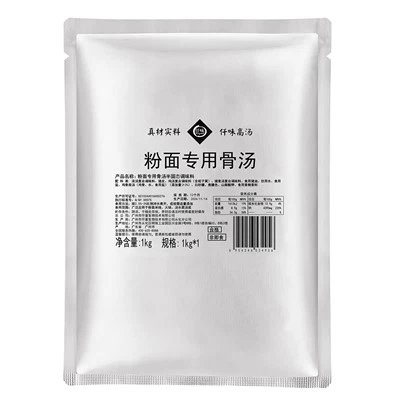
Hey there! As a supplier of Pork Bone Soup Base, I'm super excited to walk you through the process of clarifying this delicious and versatile soup base. Whether you're running a restaurant, a food production business, or just a home cook looking to up your soup game, understanding this process is key to getting that crystal - clear, flavorful broth.
Starting with Quality Ingredients
First things first, you gotta start with high - quality pork bones. I'm talking about fresh, meaty bones from a reliable source. The type of bones matters too. For a rich and full - bodied soup base, a mix of marrow bones, knuckle bones, and neck bones works like a charm. Marrow bones are packed with flavor and give that lovely creamy texture, while knuckle bones add a good amount of gelatin for thickness.
Once you've got your bones, it's time to give them a good rinse under cold water. This helps get rid of any surface blood and debris. You can also blanch the bones. Just throw them in a pot of boiling water for a couple of minutes, then drain and rinse again. Blanching further cleans the bones and removes any remaining impurities.
The Initial Boil
Now, into a large pot, add your cleaned bones. Cover them with cold water. I usually recommend using about 3 to 4 times the volume of water compared to the bones. This ratio helps extract the maximum flavor from the bones. Turn the heat up to high and bring the water to a boil.
As the water heats up, you'll start to see some foam rising to the surface. This foam is made up of blood, impurities, and some of the proteins from the bones. Use a skimmer or a spoon to carefully remove this foam as it forms. If you don't skim it off, it'll end up in your soup base, making it cloudy and giving it an off - flavor. Keep skimming for about 10 - 15 minutes until the water looks relatively clear.
Slow Simmering
After skimming, reduce the heat to low and let the bones simmer gently. This slow simmer is crucial. It allows the collagen in the bones to break down gradually, releasing gelatin into the soup. Gelatin not only gives the soup base a rich, velvety texture but also helps clarify it in the long run.
Simmer the bones for a long time, anywhere from 4 to 8 hours. The longer you simmer, the more flavor and nutrients you'll extract. You can add some aromatics like onions, carrots, celery, and garlic during the simmering process. These vegetables add depth and complexity to the soup base. Just chop them roughly and toss them in the pot.
Clarifying Agents
Once the soup has simmered for a good while, it's time to clarify it further. One of the most common methods is using a raft. To make a raft, you'll need egg whites and some minced meat. You can use ground pork for this, as it'll blend well with the pork bone soup base.
In a separate bowl, beat the egg whites until foamy. Then, add the minced meat and a bit of the warm soup base to the bowl. Mix it all together gently. The idea is to incorporate the egg whites and meat into a loose mixture.
Slowly pour this mixture into the simmering soup base. As the soup heats the raft mixture, the egg whites will start to coagulate, forming a layer on the surface. The coagulated egg whites act like a magnet, attracting any remaining impurities in the soup. As they rise to the surface, they get trapped in the raft.
Let the raft form for about 30 minutes to an hour. Then, very carefully, start to lift the raft off the surface using a slotted spoon or a skimmer. You'll see that it has captured a lot of the cloudy particles, leaving the soup base much clearer.
Straining
After removing the raft, it's time to strain the soup base. Line a fine - mesh sieve with cheesecloth or a coffee filter. Place the sieve over a clean pot or container. Slowly pour the soup base through the sieve. The cheesecloth or filter will catch any remaining solids, giving you a perfectly clear soup base.
You can strain the soup base a couple of times if you want it to be extra clear. Just be patient and let it strain slowly to avoid forcing any solids through the filter.
Cooling and Storage
Once you've strained the soup base, let it cool down to room temperature. Then, transfer it to containers and refrigerate or freeze it. Cooling the soup base in the fridge allows any remaining fat to rise to the surface, where you can easily skim it off. You can also freeze the soup base in portion - sized containers for later use.


Our Pork Bone Soup Bases
At our supply business, we've mastered this process to bring you the best - quality Pork Bone Soup Bases. We offer a variety of options, like the Soup Base for Pork Bone Hot Pot. This soup base is perfect for hot pot lovers, with its rich and savory flavor that can turn any hot pot into a memorable meal.
Our Pork Broth Base is another great choice. It's incredibly versatile and can be used in a wide range of dishes, from stews to gravies. And if you're looking for a combination of flavors, our Chicken and Pork Broth brings together the best of both worlds.
Contact for Procurement
If you're interested in our Pork Bone Soup Bases for your business or personal use, don't hesitate to reach out. We're always ready to discuss your needs and provide you with top - notch products at competitive prices. Whether you're a small restaurant or a large food manufacturer, we've got the right solution for you.
References
- "The Professional Chef" by The Culinary Institute of America
- "The Joy of Cooking" by Irma S. Rombauer, Marion Rombauer Becker, and Ethan Becker