If you’ve ever stirred a pot of tomato soup that tastes like it’s been simmering for three hours when it was actually five minutes, odds are good it’s made with a quality tomato soup base. As someone who’s been supplying these bases for years, I get asked all the time: how does tomato soup base actually taste? It’s not just a simplified version of the soup you’d serve in a bowl, right? There’s a whole science and a lot of intentional craft that goes into making those concentrated, versatile bases that turn random pantry staples into something seriously satisfying. Let me break it down—from the bright, first-sip notes to the deeper, savory layers that make these bases work overtime.
First off, let’s start with the raw material, because that’s where the taste story begins. Great tomato soup base doesn’t taste like watered-down canned tomatoes. We use vine-ripened tomatoes—picked at peak sweetness, when their acid balances just right, not too sharp and not flat. Think the kind of tomato you’d bite into straight from the garden: juicy, a little tangy, with that unmistakable sun-warmed sweetness. When we process them into a base, we remove the seeds and skins (nobody wants a stringy or bitter bite in their final soup) and break them down into a concentrated paste or liquid that locks in all that fresh flavor without it going bad. That’s why our bases hit different—they’re not made with leftover, overripe tomatoes or cheap fillers.
But the taste of tomato soup base is way more than just tomato. Let’s get into the key flavor notes, because that’s probably what you’re curious about. First, there’s the bright, acidic kick—this isn’t the kind of sour that makes your mouth pucker; it’s a clean, zingy acidity that wakes up your taste buds. It comes from citric and malic acid in the tomatoes, and when we balance it out, it doesn’t overpower the sweet side. Speaking of sweet, ripe tomatoes give that natural, not cloying, sweetness—think caramelized tomato, not added sugar. A lot of people don’t realize that high-quality bases skip the refined sugar, so that sweetness is all from the tomatoes themselves.
Then there’s the umami layer, which is where tomato soup base earns its keep. Umami is that savory, mouth-filling taste that makes food feel satisfying, not just tangy or sweet. Tomatoes naturally have umami compounds, but when we concentrate them, those compounds get more intense. You might also pick up subtle hints of roasted or even smoked undertones if the base is made with slow-roasted tomatoes (a trick we use to add depth without extra ingredients). It’s not meaty umami, but it’s rich enough that a little of this base goes a long way—you don’t need a ton to make a big pot of soup feel hearty.
Wait, and let’s not forget the balance part. A bad tomato soup base can be too acidic, too flat, or weirdly metallic (that’s what happens when you use overcooked or low-quality tomatoes). Good bases balance all those notes so none sticks out too much. The acidity cuts through the sweetness, the umami ties it all together, and there’s a smoothness from the blending process that prevents any harsh edges. It’s like a flavor foundation—you can build on it, but it already tastes good on its own if you stir it with water or broth.

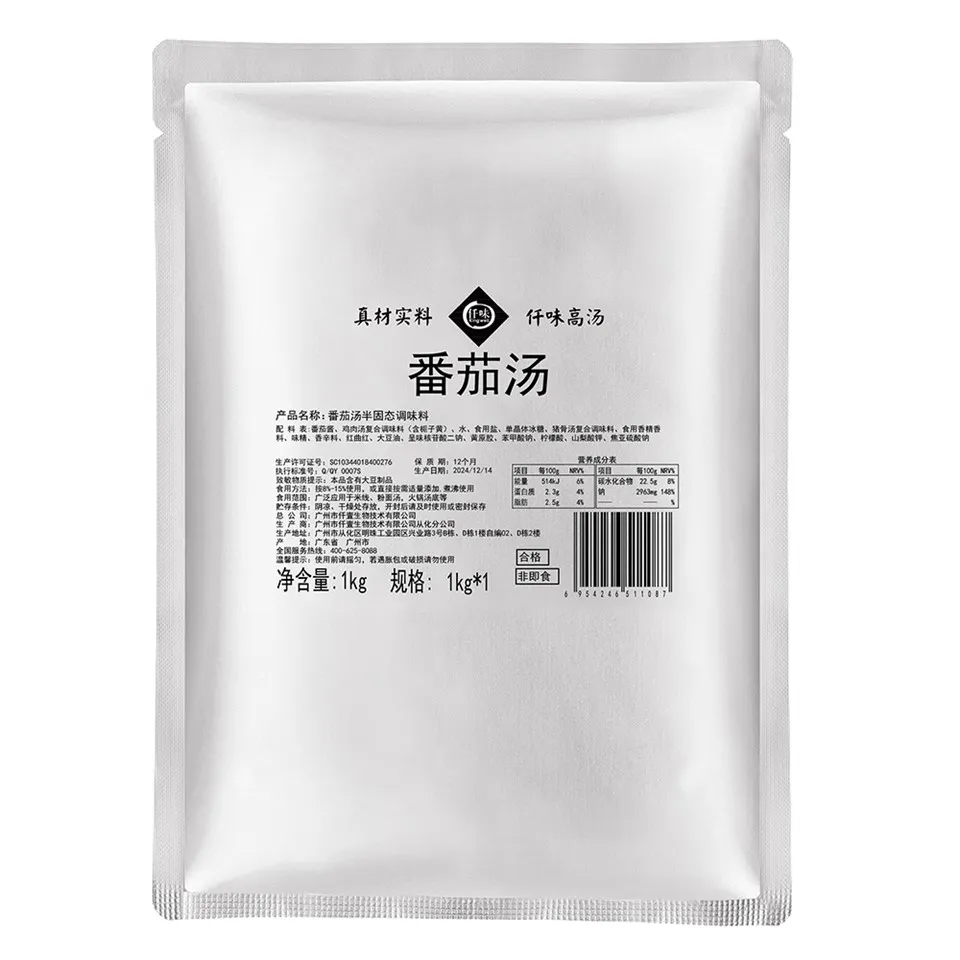
What makes tomato soup base different from, say, a regular can of tomato sauce or a bouillon cube? That’s a question I get from home cooks and restaurant chefs alike. Let’s clarify: you might have seen our Tomato Hot Pot Soup Base or our Soup Tomato Sauce, which are both related but have slightly different tastes. Wait, let’s break down our different lines because their tastes vary for specific uses. Our Tomato Soup Paste, for example, is extra concentrated—think thick, spreadable, with intense tomato flavor and a little more earthiness from the reduced liquid. It’s made for when you want to sauté it first (like with onions and garlic) to deepen that tomato flavor even more. Then there’s our Concentrated Tomato Soup, which is a liquid base, more pourable, with a lighter body but still packed with that bright tomato and umami taste. It’s perfect for quick soups because it mixes straight into hot water or broth without needing to cook it down.
Our Tomato Hot Pot Base and Tomato Hot Pot Soup Base? Those are made specifically for that spicy, communal hot pot vibe, so they have that same core tomato taste but a little more complexity—subtle hints of garlic, onion, and sometimes a touch of spice to stand up to all the other ingredients in a hot pot. But even those still taste like good tomatoes first, not just a spice mix. One thing I always tell people: if a tomato base tastes like something is missing when you taste it straight (like salt or herbs), that’s not a quality base. Sure, you can add salt or pepper later, but a good base should have a balanced, full tomato taste on its own, even in concentrated form.
I should also talk about how processing affects the taste, because that’s a big part of what makes our bases stand out. When we concentrate the tomatoes, we do it slowly—using low heat to evaporate the water, not high heat that burns the tomatoes and gives a bitter, cooked-out taste. High heat breaks down the natural sugars and acids too fast, leading to a flat or burnt flavor. Slow concentration locks in all those fresh, bright notes while removing excess water, so you get a concentrated version that still tastes like ripe tomatoes, not tomato paste that’s been sitting in a can for a year. We also don’t add any artificial flavors or preservatives—just tomatoes, maybe a little salt, and natural herbs like basil or oregano in some of our blends. That’s why when you use our base, the final soup tastes fresh, not processed.
Let’s get specific about the texture too, because texture ties into taste. A tomato soup base should be smooth, not grainy or gritty. When we strain the tomatoes, we get rid of all the tough skins and seeds, so there’s no weird texture that distracts from the flavor. That smoothness means the taste hits evenly, not in clumps—every bite of your final soup will have that same balanced tomato flavor, not some bites with tomato pulp and some without.
Wait, let’s address a common misconception: some people think concentrated bases have a “canned” taste. That’s only if they’re made with low-quality, overprocessed tomatoes. Our bases taste like fresh tomatoes that have been simmered down, not like the metallic tang of a cheap canned product. I recently had a home cook tell me she tried another brand’s base and it tasted “like tomato juice concentrate,” but when she used ours, she said it tasted like she’d spent all afternoon making soup from scratch. That’s the goal: to save people time without sacrificing flavor.
Another thing: versatility affects how people perceive the taste. A tomato soup base isn’t just for soup. You can use it in pasta sauce, chili, marinades, even as a base for stews. Because the taste is balanced—bright, sweet, umami—it works in so many dishes. You might not even realize a dish uses a tomato base, but it’s adding that secret depth that makes it taste better. For example, if you use our Soup Tomato Sauce to make pasta, it’s not just a tangy tomato sauce; there’s that umami layer that makes the sauce feel rich, not just acidic.
Let’s get back to the core question: how does tomato soup base taste? If I had to sum it up in a few words, it’s balanced, vibrant tomato flavor with bright acidity, subtle natural sweetness, a rich umami depth, and no harsh or artificial aftertastes. It’s concentrated enough that a little goes a long way, but it’s not overpowering. Each type of base has its own little twist—like our Tomato Hot Pot Base has that extra depth for spicy meals, our Tomato Soup Paste is thick and intense for slow-cooked dishes, and our Concentrated Tomato Soup is light and pourable for quick meals—but they all share that same core, fresh tomato taste that’s the result of using good tomatoes and careful processing.
I’ve been in this business long enough to know that not all tomato soup bases are created equal. Some are just tomato powder with additives, others are watered-down tomato pulp. The ones that taste good are the ones that respect the tomato—they let the natural flavor shine through, instead of masking it with extra salt, sugar, or artificial stuff. When a customer tells me they used our base and their family asked if they made soup from scratch, that’s the best feedback. Because that’s exactly what a good tomato soup base should do: make great food without all the work.
If you’re a home cook looking to cut down on meal prep, or a chef who needs a reliable base for your menu, the taste of quality tomato soup base is non-negotiable. It’s the difference between a bland, forgettable soup and one that has that comforting, satisfying taste people come back for. It’s about balance, depth, and letting the star ingredient—tomatoes—do the heavy lifting. If you’re curious to try the difference a good base makes, check out our range: from our versatile Concentrated Tomato Soup to our specialty Tomato Hot Pot Soup Base. Each one is made with the same care to deliver that authentic tomato taste, concentrated for your convenience.
Ready to elevate your tomato-based dishes? Whether you’re stocking your pantry for quick weeknight meals or sourcing a reliable ingredient for your food service, we’re here to help. Reach out to discuss your needs and find the right tomato soup base for your specific recipes and flavor preferences.
References
- McGee, H. (2004). On Food and Cooking: The Science and Lore of the Kitchen. Scribner.
- Felle, H. H. (2001). Sensory and chemical properties of ripe tomato fruits. Journal of Experimental Botany, 52(362), 1967-1976.
- Zhang, Y., et al. (2020). Umami compounds in tomatoes: composition, content, and their role in food flavor. Food Chemistry, 328, 127085.
- Slavin, J. L., & Lloyd, B. (2010). Health benefits of fruits and vegetables. Advanced Nutrition, 1(2), 106-114.
- Lindley, M. G. (2005). The chemistry of tomato flavor. Journal of the Science of Food and Agriculture, 85(11), 1783-1791.