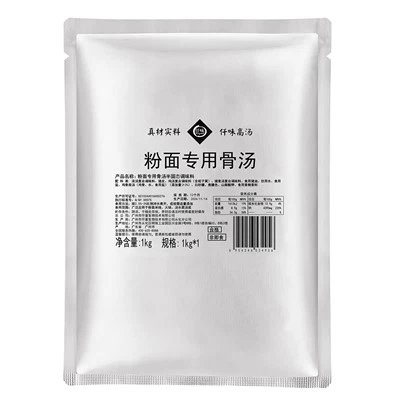
When it comes to cooking a delicious Pork Bone Soup Base, one of the most crucial factors is the temperature. As a supplier of high - quality Pork Bone Soup Base, I've spent years researching and experimenting to find the optimal cooking temperature. In this blog, I'll share with you what I've learned and why it matters.
The Basics of Pork Bone Soup Base
Before delving into the ideal temperature, let's briefly understand what a Pork Bone Soup Base is. A Pork Bone Soup Base is a concentrated liquid made by simmering pork bones, often with vegetables, herbs, and spices. It serves as the foundation for a variety of dishes, from Pork Broth Soup to Chicken and Pork Broth. Its rich flavor and nutritional value make it a staple in many kitchens around the world.
The Role of Temperature in Cooking Pork Bone Soup Base
Temperature plays a multi - faceted role in the cooking process of Pork Bone Soup Base. It affects the extraction of flavors, the breakdown of connective tissues, and the overall quality of the soup base.
Flavor Extraction
The flavor of a Pork Bone Soup Base comes from the various components in the bones and added ingredients. At different temperatures, different flavor compounds are released. For example, at lower temperatures, the subtle, sweet flavors from the bones are slowly extracted. As the temperature rises, more intense and complex flavors are released, including umami - rich substances.


Breakdown of Connective Tissues
Pork bones contain a significant amount of connective tissues, such as collagen. Collagen is a tough protein that needs to be broken down into gelatin to give the soup base its characteristic richness and thickness. Temperature is the key factor in this process. If the temperature is too low, the collagen won't break down effectively, resulting in a thin and less flavorful soup base. On the other hand, if the temperature is too high, the collagen can break down too quickly, leading to a cloudy and less appealing soup base.
Microbial Safety
Temperature also plays a crucial role in ensuring the safety of the soup base. Bacteria can grow rapidly in the "danger zone" of temperatures between 40°F (4°C) and 140°F (60°C). Cooking the soup base at the right temperature for an appropriate amount of time helps to kill harmful bacteria and make the soup base safe for consumption.
Different Temperature Ranges and Their Effects
Low - Temperature Cooking (160°F - 180°F or 71°C - 82°C)
Low - temperature cooking is a gentle and slow process. At this temperature range, the bones and ingredients are cooked slowly, allowing for a gradual extraction of flavors. The collagen in the bones breaks down steadily, resulting in a clear, rich, and flavorful soup base. The slow cooking also helps to preserve the nutrients in the bones and ingredients.
One of the advantages of low - temperature cooking is that it requires less attention. You can set the temperature and let the soup base cook for several hours without worrying about it boiling over or burning. However, the downside is that it takes a long time. It can take anywhere from 6 to 12 hours or even longer to achieve a well - developed flavor and thickness.
Medium - Temperature Cooking (180°F - 200°F or 82°C - 93°C)
Medium - temperature cooking is a balance between speed and quality. At this temperature range, the flavor extraction is faster than at low temperatures, and the collagen breaks down more quickly. The soup base can reach a good level of flavor and thickness in 4 to 6 hours.
The soup base cooked at medium temperatures has a slightly more intense flavor compared to low - temperature cooking. However, there is a risk of the soup base becoming a bit cloudy if the temperature is not carefully controlled. This is because the faster breakdown of collagen can cause some impurities to be released into the soup.
High - Temperature Cooking (200°F - 212°F or 93°C - 100°C)
High - temperature cooking, which involves boiling the soup base, is the fastest way to cook. At this temperature, the flavor extraction is rapid, and the soup base can be ready in 2 to 4 hours. However, boiling can cause the soup base to become cloudy and lose some of its delicate flavors. The rapid boiling can also break the bones into smaller pieces, which may end up in the soup base and affect its texture.
Moreover, high - temperature cooking can lead to the loss of some nutrients due to the intense heat. For example, some vitamins and minerals may be destroyed or leached out of the soup base.
The Best Temperature for Cooking Pork Bone Soup Base
Based on my experience and research, the best temperature for cooking Pork Bone Soup Base is in the range of 180°F - 190°F (82°C - 88°C). This temperature range offers the best balance between flavor extraction, breakdown of connective tissues, and overall quality.
At 180°F - 190°F, the collagen in the bones breaks down at a steady pace, resulting in a clear, rich, and flavorful soup base. The flavor extraction is efficient, and the soup base develops a complex and well - rounded flavor profile. It takes about 4 to 6 hours to cook the soup base at this temperature range, which is a reasonable amount of time for most home cooks and commercial kitchens.
Tips for Cooking Pork Bone Soup Base at the Right Temperature
- Use a Thermometer: To ensure that you are cooking the soup base at the right temperature, use a reliable thermometer. An instant - read thermometer is a great tool for checking the temperature of the soup base.
- Start with Cold Water: When making the soup base, start with cold water. This allows the flavors to be extracted gradually as the water heats up.
- Skim the Surface: As the soup base cooks, impurities and foam will rise to the surface. Skim these off regularly to keep the soup base clear and clean.
- Add Ingredients at the Right Time: Different ingredients have different cooking times. Add vegetables and herbs at the appropriate time to ensure that they contribute to the flavor without becoming overcooked.
Conclusion
The best temperature for cooking Pork Bone Soup Base is a crucial factor in achieving a delicious and high - quality product. While different temperature ranges have their own advantages and disadvantages, the range of 180°F - 190°F (82°C - 88°C) offers the best balance.
As a supplier of Pork Broth Base, I understand the importance of using the right cooking temperature. Our products are made with high - quality pork bones and are carefully cooked at the optimal temperature to ensure the best flavor and quality.
If you are interested in purchasing our Pork Bone Soup Base for your restaurant, catering business, or home kitchen, we would love to hear from you. Contact us to discuss your specific needs and requirements. We are committed to providing you with the best - tasting and most nutritious Pork Bone Soup Base on the market.
References
- "Professional Cooking" by Wayne Gisslen
- "The Science of Good Cooking" by America's Test Kitchen