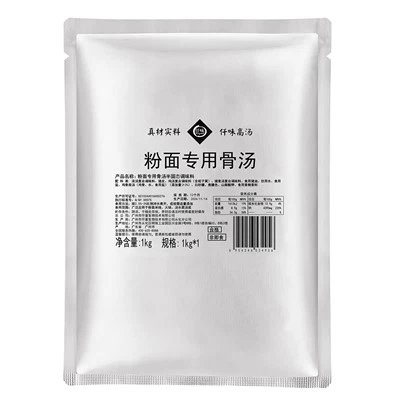
Hey there! I'm a pork stock supplier, and I often get asked, "How do I know when pork stock is done?" It's a great question, and today, I'm gonna break it down for you.
First off, let's talk about why making the perfect pork stock matters. Pork stock is the backbone of so many delicious dishes. Whether you're whipping up a Pork Ramen Stock, a hearty Pork Broth Soup, or using it as a base for a rich Pork Bone Soup Base, a well - made stock can take your cooking to the next level.
The Basics of Making Pork Stock
Before we dive into knowing when it's done, let's quickly go over how to make pork stock. You'll need some pork bones (like pork neck bones, spare ribs, or a combination), some vegetables (onions, carrots, celery are classic), herbs (such as thyme, rosemary, and parsley), and some water.
Start by browning the pork bones in a hot pan. This step adds a lot of flavor to the stock. Then, transfer the bones to a large pot and add your vegetables, herbs, and enough water to cover everything. Bring it to a boil, then reduce the heat to a gentle simmer.
Appearance: A Visual Clue
One of the first things you can look at is the appearance of the stock. As the stock simmers, it'll start to change color. At the beginning, it'll be a bit cloudy and pale. But as time goes on, it'll become darker and more translucent.
When the stock is almost done, it should have a rich, golden - brown color. You'll notice that it has a nice sheen to it, which indicates that the fats and gelatin from the bones have been released into the liquid. If the stock still looks too pale and thin, it probably needs more time on the stove.
Another visual cue is the presence of impurities. As the stock simmers, you'll see some foam and scum rising to the surface. Skim this off regularly. When the stock is done, there shouldn't be much more of this foam coming up. If you're constantly skimming off a lot of foam, the stock is still in the process of clarifying and needs more time.
Aroma: Follow Your Nose
The smell of the stock is a huge indicator of its readiness. At the start, the stock will have a somewhat raw, meaty smell. But as it cooks, the flavors will meld together, and the aroma will become more complex.
When the stock is done, it should smell rich, savory, and full of porky goodness. You'll be able to detect the flavors of the vegetables and herbs as well. If the smell is still kind of bland or just smells like boiled water with a hint of meat, keep simmering.
Taste: The Ultimate Test
Of course, the best way to know if the stock is done is to taste it. But be careful! The stock will be really hot, so take a small sip and blow on it first.


When you take a taste, the stock should have a deep, umami flavor. It should be well - balanced, with the flavors of the pork, vegetables, and herbs coming through. If it tastes too weak or one - dimensional, it needs more cooking.
The stock should also have a bit of a thickness to it. You should be able to feel a slight stickiness on your lips and tongue when you swallow it. This is because of the gelatin from the bones, which gives the stock a velvety texture. If the stock tastes watery and lacks this mouthfeel, it's not ready yet.
Consistency: A Matter of Texture
The consistency of the stock is another important factor. When the stock is done, it should be thick enough to coat the back of a spoon. Dip a spoon into the stock and lift it out. If the liquid runs off the spoon quickly, the stock is too thin and needs more time to reduce.
On the other hand, if the stock is too thick and almost like a paste, you may have simmered it for too long or reduced it too much. In this case, you can add a bit of water to thin it out.
Time: A General Guideline
While appearance, aroma, taste, and consistency are great indicators, time can also give you a rough idea. For a basic pork stock, it usually takes about 3 to 4 hours of simmering. However, if you're using tougher bones or want an even richer stock, you can simmer it for up to 6 hours or more.
But remember, time isn't the only factor. Every batch of stock is different, depending on the type and amount of bones, the vegetables used, and the heat of your stove. So, always rely on your senses in addition to the clock.
Cooling and Storage: The Final Step
Once you think the stock is done, it's time to cool it down. Remove the pot from the heat and let it sit for about 10 - 15 minutes. Then, strain the stock through a fine - mesh sieve into a clean container. This will remove any bones, vegetables, or herbs that are left in the stock.
Let the stock cool to room temperature, then transfer it to the fridge. As it cools, you'll notice that it thickens even more. This is a good sign that the stock has enough gelatin. If it doesn't thicken at all, it may need more cooking next time.
You can store the stock in the fridge for up to 3 days or freeze it for several months.
Contact for Purchase
If you're in the food business or just a home cook who loves using high - quality pork stock, I'd love to talk to you. I supply top - notch pork stock that's made with the same care and attention as the stock I've described here. Whether you're a restaurant owner looking to add a delicious touch to your dishes or a home chef wanting to make restaurant - quality meals, my pork stock is the way to go.
Get in touch with me if you're interested in learning more about my products, getting a sample, or discussing a purchase. I'm always happy to answer any questions you might have and work out a deal that suits your needs.
References
- "The Professional Chef" by The Culinary Institute of America
- "Joy of Cooking" by Irma S. Rombauer, Marion Rombauer Becker, and Ethan Becker