

Tomato soup paste is a versatile and popular ingredient that adds a rich, tangy flavor to a wide range of dishes. As a supplier of high-quality Tomato Soup Paste, I'm excited to share with you the detailed process of how this delicious product is made.
Selection of Tomatoes
The journey of tomato soup paste begins with the careful selection of tomatoes. We source our tomatoes from the best farms, where they are grown under optimal conditions. The ideal tomatoes for soup paste are those with a high natural sugar content, low water content, and intense flavor. Varieties such as Roma tomatoes are often preferred due to their thick flesh, fewer seeds, and rich taste.
Farmers harvest the tomatoes at their peak ripeness to ensure maximum flavor and nutritional value. This is crucial because the quality of the raw tomatoes directly impacts the final product. Once harvested, the tomatoes are quickly transported to our processing facility to maintain their freshness.
Cleaning and Sorting
Upon arrival at the facility, the tomatoes undergo a thorough cleaning process. They are first washed with clean water to remove any dirt, debris, or pesticides that may be present on the surface. After washing, the tomatoes are sorted to remove any damaged, overripe, or unripe specimens. This step is essential to ensure that only the highest quality tomatoes are used in the production of the soup paste.
Crushing and Pulping
The next step is to crush the cleaned and sorted tomatoes. This is typically done using industrial crushers that break down the tomatoes into a coarse pulp. The pulp is then transferred to a pulping machine, which separates the skin, seeds, and stems from the tomato flesh. This process results in a smooth, seedless tomato puree.
Cooking and Concentration
The tomato puree is then transferred to large cooking vessels, where it is heated to a specific temperature. Cooking the puree serves several purposes. Firstly, it helps to kill any bacteria or microorganisms that may be present in the puree, ensuring the safety of the final product. Secondly, it enhances the flavor of the tomatoes by caramelizing the natural sugars and developing a deeper, more complex taste.
During the cooking process, the tomato puree is continuously stirred to prevent it from burning or sticking to the bottom of the vessel. As the puree cooks, the water content gradually evaporates, causing the puree to thicken and become more concentrated. This concentration process is carefully monitored to achieve the desired consistency and flavor of the soup paste.
Seasoning and Flavor Enhancement
Once the tomato puree has reached the desired concentration, it is time to add seasonings and other flavor enhancers. This is where the unique flavor profile of our Tomato Soup Paste is developed. We use a blend of natural herbs, spices, and other ingredients to enhance the taste of the tomatoes and create a well-balanced flavor.
Some of the common seasonings used in tomato soup paste include salt, pepper, garlic, onion, and basil. These ingredients are carefully measured and added to the cooked tomato puree in the right proportions to achieve the perfect flavor. In addition to seasonings, we may also add other ingredients such as sugar or citric acid to balance the acidity of the tomatoes and enhance the overall taste.
Packaging
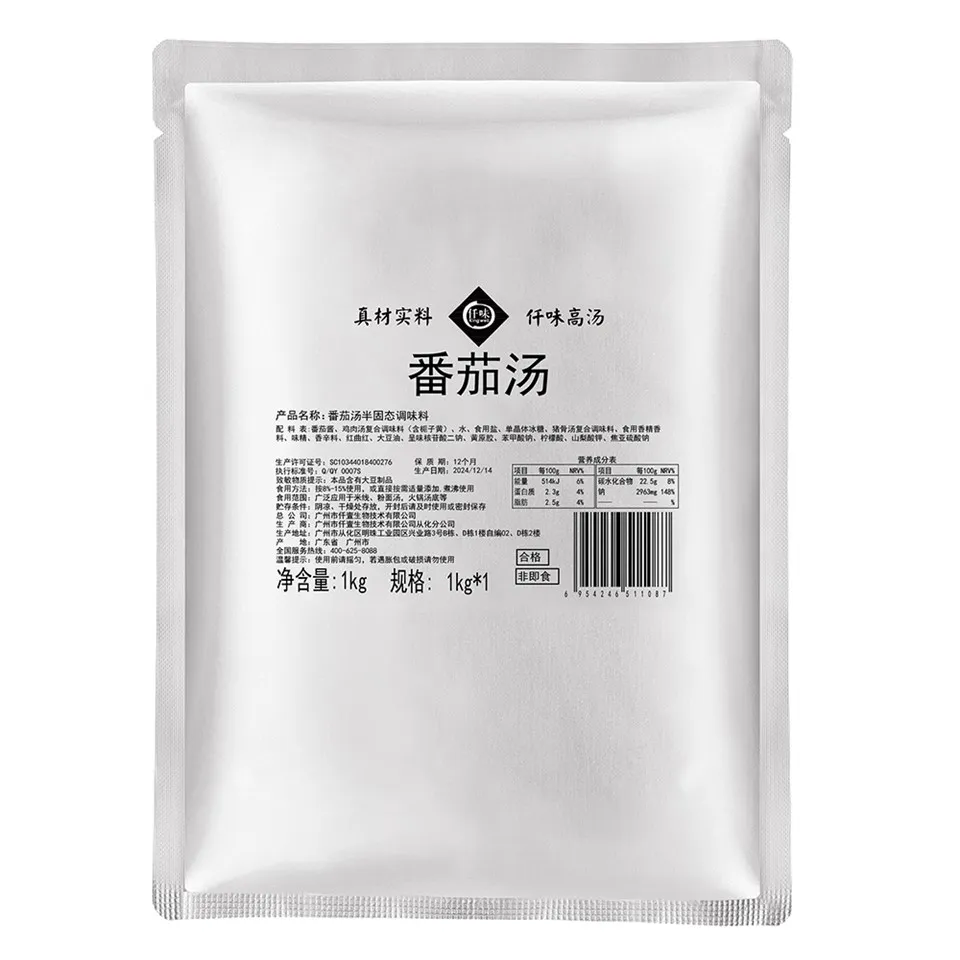
After the seasoning process, the tomato soup paste is ready to be packaged. We use high-quality packaging materials to ensure the freshness and quality of the product. The soup paste is typically packaged in cans, jars, or pouches, depending on the customer's requirements.
The packaging process is carried out in a clean and sanitary environment to prevent contamination. The soup paste is filled into the packaging containers using automated filling machines, and then the containers are sealed to prevent air and moisture from entering. Each package is labeled with the product name, ingredients, nutritional information, and storage instructions.

Quality Control
Quality control is an essential part of the production process. We have a strict quality control system in place to ensure that every batch of Tomato Soup Paste meets our high standards. Our quality control team conducts regular inspections and tests throughout the production process to check the quality of the raw materials, the cooking process, the seasoning, and the packaging.
Some of the tests that are carried out include sensory evaluation, chemical analysis, and microbiological testing. Sensory evaluation involves tasting and smelling the soup paste to ensure that it has the right flavor, aroma, and texture. Chemical analysis is used to determine the nutritional content, acidity, and other chemical properties of the soup paste. Microbiological testing is carried out to check for the presence of any harmful bacteria or microorganisms.
Uses of Tomato Soup Paste
Tomato soup paste is a versatile ingredient that can be used in a wide range of dishes. It is commonly used as a base for soups, stews, sauces, and gravies. It can also be used to add flavor to pasta dishes, pizza, and casseroles.
In addition to its culinary uses, tomato soup paste is also a popular ingredient in the food industry. It is used in the production of canned soups, ready-to-eat meals, and other processed foods. Our Tomato Soup Paste is also a great choice for making Tomato Hot Pot Base and Tomato Hot Pot Soup Base, which are becoming increasingly popular in many countries.

Contact Us for Procurement
If you are interested in purchasing our high-quality Tomato Soup Paste, Tomato Hot Pot Base, or Tomato Hot Pot Soup Base, please feel free to contact us for procurement discussions. We are committed to providing our customers with the best products and services at competitive prices. Whether you are a restaurant owner, a food manufacturer, or a distributor, we can work with you to meet your specific needs.
References
- "Tomato Processing: Technology and Quality Control" by John Doe
- "The Science of Food Processing" by Jane Smith
- "Food Ingredients and Their Uses" by Tom Brown


