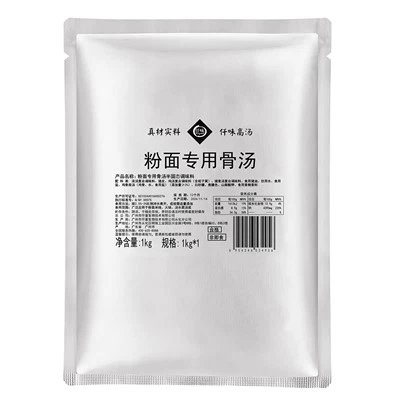
In the realm of scientific research, the significance of reliable and high - quality resources cannot be overstated. As a supplier of the Fish Stock Base, I have witnessed firsthand how this product plays a crucial role in supporting various scientific endeavors. In this blog, I will delve into the ways in which the Fish Stock Base contributes to scientific research.
1. Nutrition and Biochemistry Research
One of the primary areas where the Fish Stock Base proves invaluable is in nutrition and biochemistry research. The base is rich in a variety of nutrients, including proteins, amino acids, vitamins, and minerals. Scientists can use the Fish Stock Base as a standardized medium to study the metabolic processes of different organisms.
For instance, researchers interested in the effects of fish - derived nutrients on human health can utilize the Fish Stock Base to conduct in - vitro and in - vivo experiments. They can analyze how specific amino acids in the stock are absorbed and utilized by cells, or how the vitamins and minerals contribute to various physiological functions. This type of research is essential for understanding the nutritional value of fish and developing dietary guidelines.
In addition, the Fish Stock Base can be used to study the biochemical composition of fish itself. By analyzing the components of the stock, scientists can gain insights into the unique biochemical properties of different fish species. This knowledge can be applied in areas such as fish breeding and aquaculture, where understanding the genetic and biochemical basis of fish traits is crucial for improving fish quality and productivity.
2. Aquatic Ecology and Environmental Science
The Fish Stock Base also has significant applications in aquatic ecology and environmental science. In aquatic ecosystems, fish play a vital role in the food web and nutrient cycling. The stock base can be used to simulate the natural food sources of fish in laboratory settings, allowing scientists to study the feeding behavior and ecological interactions of fish.
For example, researchers can use the Fish Stock Base to conduct experiments on the growth and survival of fish larvae. By providing a consistent and controlled diet, they can accurately measure the effects of different environmental factors, such as water temperature, pH, and pollution levels, on the development of fish. This information is essential for understanding the impacts of environmental changes on fish populations and for developing conservation strategies.
Moreover, the Fish Stock Base can be used in studies of water quality and pollution. Since the stock contains various organic and inorganic substances, it can be used as a model to study the fate and transport of pollutants in aquatic environments. Scientists can analyze how pollutants interact with the components of the stock and how they affect the health and behavior of fish. This research can help in the development of effective water treatment and pollution control measures.
3. Microbiology and Food Safety
Microbiology and food safety are other important fields where the Fish Stock Base finds applications. The stock base provides a rich source of nutrients for microorganisms, making it an ideal medium for culturing and studying bacteria, fungi, and other microorganisms associated with fish.
Scientists can use the Fish Stock Base to isolate and identify pathogenic microorganisms that may cause diseases in fish or pose a risk to human health when consuming fish products. By studying the growth characteristics and virulence factors of these microorganisms, researchers can develop strategies for preventing and controlling fish diseases and ensuring the safety of fish products.
In addition, the Fish Stock Base can be used to study the spoilage mechanisms of fish. Microorganisms are the main cause of fish spoilage, and understanding their behavior in the stock can help in developing effective preservation methods. For example, researchers can study the effects of different preservatives on the growth of spoilage microorganisms in the stock and determine the optimal conditions for extending the shelf - life of fish products.
4. Pharmacology and Drug Development
The unique biochemical composition of the Fish Stock Base also makes it a valuable resource in pharmacology and drug development. Fish are known to produce a variety of bioactive compounds with potential therapeutic applications. The stock base can be used to extract and isolate these bioactive compounds for further study.
For example, some fish species produce peptides and proteins with antimicrobial, anti - inflammatory, and antioxidant properties. Scientists can use the Concentrated Fish Stock as a starting material to purify these bioactive compounds and evaluate their pharmacological activities. This research can lead to the development of new drugs and nutraceuticals for treating various diseases.
Furthermore, the Fish Stock Base can be used in pre - clinical studies to evaluate the efficacy and safety of new drugs. By using the stock as a model system, researchers can study the absorption, distribution, metabolism, and excretion of drugs in fish and assess their potential side effects. This information can provide valuable insights for the development of drugs for both fish and humans.
5. Support for Standardized Research
One of the key advantages of the Fish Stock Base is its ability to provide a standardized and reproducible resource for scientific research. As a supplier, we ensure that the Fish Stock Base is produced under strict quality control measures, with consistent composition and properties.
This standardization is crucial in scientific research, as it allows for accurate comparisons between different experiments and studies. Scientists can rely on the consistency of the stock base to obtain reliable and comparable results, which is essential for building a solid foundation of scientific knowledge.


In addition, the availability of a standardized Fish Stock Base reduces the variability associated with using natural fish or other complex food sources in research. This makes it easier for researchers to control experimental conditions and isolate the effects of specific variables, leading to more precise and meaningful scientific conclusions.
Contact for Procurement
If you are involved in scientific research and are interested in using our high - quality Fish Stock Base, we invite you to reach out for procurement discussions. Our team is dedicated to providing the best products and services to support your research needs. Whether you are conducting a small - scale laboratory experiment or a large - scale research project, our Fish Stock Base can be a valuable asset.
References
- Blaxter, J. H. S. (1988). The energy cost of growth and swimming in fish. Journal of Fish Biology, 33(Suppl. A), 165 - 185.
- Boyd, C. E., & Tucker, C. S. (1998). Pond aquaculture water quality management. Kluwer Academic Publishers.
- Huss, H. H. (1995). Quality and safety issues in fish processing. Food Research International, 28(3), 219 - 231.
- Lovell, R. T. (1989). Nutrition and feeding of fish. AVI Publishing Company.
- Sargent, J. R., McEvoy, L. A., & Bell, J. G. (1997). The role of highly unsaturated fatty acids in marine fish larval nutrition. Aquaculture, 155(1 - 4), 117 - 138.